
How to Choose Between Self Drive and Guided Safari 2026
Learning how to choose between self drive and guided safari can make or break your entire African adventure. You either crave the absolute freedom of steering your own 4×4 across open plains, or you prefer leaning back while an expert spots a hidden leopard. How to Choose Between Self Drive and Guided Safari Both travel styles offer unforgettable moments, but picking the wrong one leads to wasted money, unnecessary stress, and missed wildlife encounters.
How to Choose Between Self Drive and Guided Safari Based on Budget
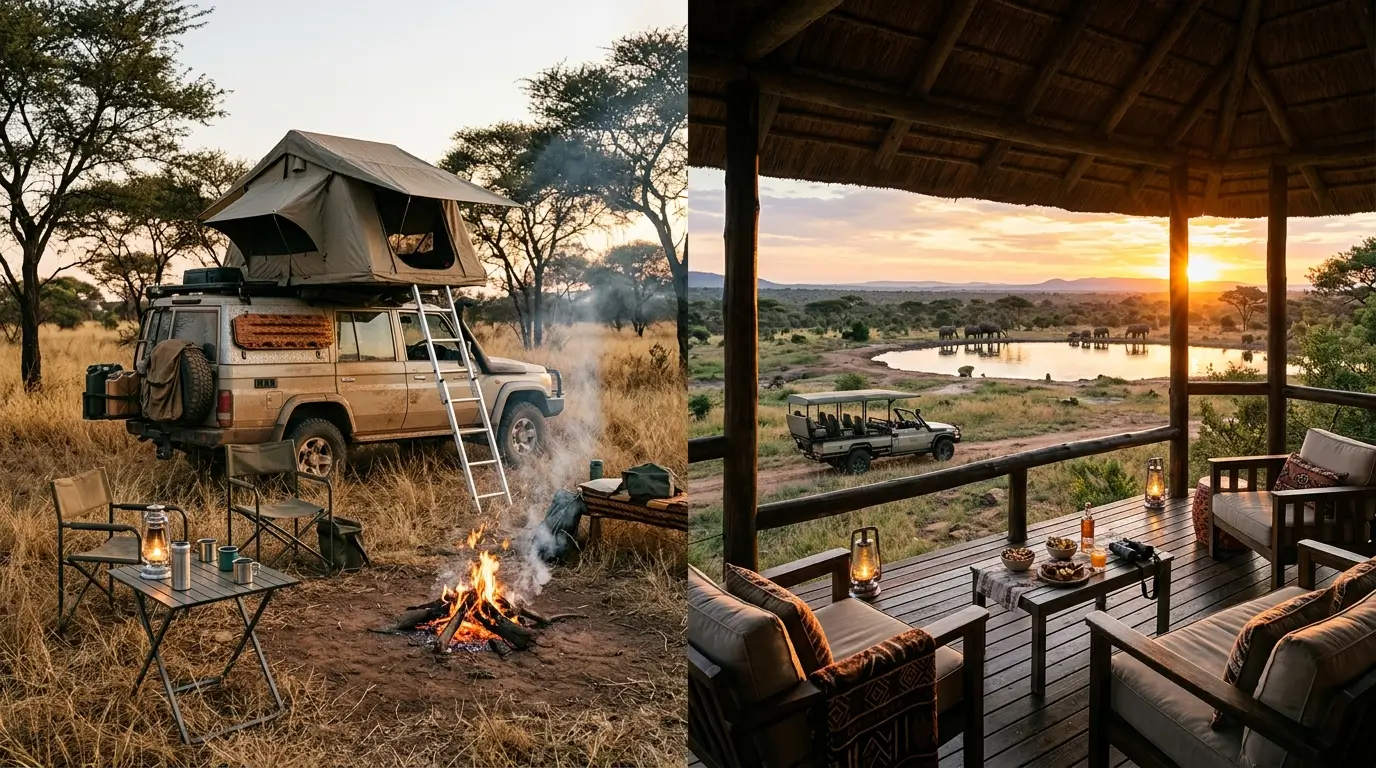
Hiring a fully equipped expedition vehicle looks remarkably affordable when you compare daily rental rates to luxury lodge invoices. Renting a rugged Toyota Hilux with a rooftop tent from Bushlore or Britz typically runs between $120 and $250 per day, depending on the season and your insurance package. How to Choose Between Self Drive and Guided Safari When you split that cost between two or four people and camp inside public rest camps, your overall trip budget stays pleasantly low.
Guided safaris demand a much higher initial investment. Top-tier private lodges and fly-in camps charge anywhere from $500 to well over $1,500 per person per night. How to Choose Between Self Drive and Guided Safari That steep price tag covers your private tracker, open game viewer vehicle, luxury tented suite, chef-prepared meals, and conservation fees.
Hidden costs swing the math in surprising ways. Self-drivers must pay out of pocket for cross-border vehicle permits, hefty fuel bills in low gear, satellite phone rentals, national park entry fees, and park conservation taxes. How to Choose Between Self Drive and Guided Safari Guided packages wrap those variables into a single price, protecting you from unexpected repair bills or surprise fee changes at remote park gates.
Wildlife Spotting and Animal Tracking Realities
Spotting a camouflaged predator in dense golden savannah grass requires years of dedicated field practice. Professional safari guides spend decades learning animal behavior, reading fresh paw prints in dusty tracks, and recognizing alarm calls from birds and baboons. How to Choose Between Self Drive and Guided Safari Guides also communicate constantly over closed VHF radio networks, sharing coordinates whenever a pride of lions makes a kill or a cheetah steps into a clearing.
Driving yourself means you handle vehicle mechanics and animal tracking simultaneously. You will inevitably drive past leopards resting silently in broad fever trees or cheetahs lying flat behind small mounds of earth. How to Choose Between Self Drive and Guided Safari The wildlife density you observe on your own is almost always lower than what an experienced tracker finds during a three-hour morning drive.
Finding wildlife completely unassisted creates an unmatched personal thrill, IMO. How to Choose Between Self Drive and Guided Safari When you spend two patient hours following fresh lion tracks along a dry riverbed and finally spot them drinking at a waterhole, the satisfaction beats sitting in a group vehicle where someone points out the predator for you.
Road Conditions, Driving Skills, and Bush Logistics
Deep sand tracks, rocky escarpments, and unpredictable river crossings test your mechanical patience every single hour. Taking the wheel across places like Moremi Game Reserve in Botswana requires genuine off-road driving experience and constant mechanical vigilance. How to Choose Between Self Drive and Guided Safari You must know how to deflate all-terrain tires to 1.2 bar for traction in thick sand, engage mechanical differential locks, and operate recovery tracks without panicking.
Sitting in a commercial safari vehicle removes every shred of transportation anxiety. How to Choose Between Self Drive and Guided Safari Your driver handles sticky mud ruts, avoids hidden tree stumps, and monitors engine temperatures while you focus your camera lens on approaching elephant herds.
Self-drive requires intense concentration on the road surface directly ahead of your bumper. How to Choose Between Self Drive and Guided Safari If you spend your entire morning scanning for sharp roots and deep sand ruts, you cannot watch the tree canopy for birds or scan open plains for hunting wild dogs. A guided safari frees your eyes completely so you can absorb the landscape.

Daily Flexibility Versus Total Relaxation
Nothing compares to making your own morning coffee and setting your own daily pace without a rigid group schedule. Deciding your daily rhythm is a major factor when figuring out how to choose between self drive and guided safari options for your trip. How to Choose Between Self Drive and Guided Safari If you want to spend four uninterrupted hours sitting beside a waterhole watching elephant calves play in the mud, nobody will tell you it is time to move on.
Guided lodge routines run on strict, optimized schedules. Your camp staff wakes you at 5:00 AM with hot tea, ushers you into the game vehicle by 5:30 AM, and brings you back to camp around 9:30 AM for a communal breakfast. You gain flawless organization, but you surrender daily itinerary control to the lodge schedule and the preferences of other guests sharing your vehicle.
Total autonomy brings daily camp chores along for the ride. How to Choose Between Self Drive and Guided Safari After spending nine tiring hours driving under the blazing African sun, self-drivers must pitch camp, cook dinner over an open fire, wash greasy pots, and pack everything away securely from hyenas before crawling into bed.
Remote Bush Safety and Vehicle Breakdowns
Flat tires happen in remote wilderness areas, frequently miles away from the nearest manned park gate. Changing a heavy off-road tire on a loaded 4×4 while checking your surroundings for curious predators requires a calm demeanor and solid safety awareness. How to Choose Between Self Drive and Guided Safari You must carry emergency gear, including a satellite communicator, high-lift jack, tire repair kit, and at least twenty liters of clean drinking water.
Professional safari rangers carry advanced certifications that prioritize remote bush safety at every turn. How to Choose Between Self Drive and Guided Safari They understand mock charges, know the exact distance to give an agitated bull elephant, and position their vehicles for an immediate exit route if animal behavior shifts suddenly.
Bush etiquette errors create serious hazards. Inexperienced drivers often cut off migrating herds, park too close to nervous mothers, or leave their vehicles in dangerous unfenced zones. How to Choose Between Self Drive and Guided Safari A guided vehicle eliminates safety mistakes and gives first-time visitors total peace of mind around dangerous game.

Safari Destination Infrastructure and Country Differences
Different African countries cater to distinct travel setups, making geography a huge factor in your final decision. Understanding geographic infrastructure is critical for how to choose between self drive and guided safari travel in Southern versus East Africa.
Southern Africa represents the world capital of self-drive safaris. South Africa and Namibia feature incredible roads, well-marked national parks, affordable vehicle hire networks, and fenced rest camps with hot showers and grocery stores. Etosha and Kruger National Park are exceptionally beginner-friendly for independent drivers.
Also Read: What to Pack for a Wildlife Safari Adventure 2026
East African parks operate under very different dynamics. Kenya and Tanzania feature vast distances, rough unmarked tracks, steep foreign vehicle park fees, and complex park entry bureaucracy. Exploring the Maasai Mara or Serengeti without a local safari company often leads to high stress and inflated costs.
Take a look at how key safari destinations compare for both travel styles:
- South Africa: Excellent paved roads, clear signposts, fenced camps, ideal for self-drive.
- Namibia: Well-maintained gravel highways, wide desert landscapes, perfect for rookie 4×4 campers.
- Botswana: Deep sand tracks, wild unfenced campsites, best for experienced off-road drivers.
- Tanzania: Rough remote tracks, high vehicle fees, heavily suited for guided safari tours.
- Kenya: Intense cross-country driving, best experienced with licensed local driver-guides.
Evaluating your target country’s safari destination infrastructure prevents costly routing mistakes before you book your flights.
Matching Your Travel Personality to the Right Option
Your individual travel style matters far more than matching someone else’s trip itinerary. Ultimately, the simplest framework on how to choose between self drive and guided safari routes comes down to your personal priorities.
Choose a self-drive safari if you:
- Enjoy mechanical problem-solving, map reading, and handling your own 4×4 gear.
- Value complete privacy and want to set your own photography timeline.
- Want to stretch your budget over three or four weeks instead of just a few days.
- Prefer wilderness camping and cooking meals beneath open, starlit skies.
Choose a guided safari if you:
- Want the highest statistical probability of viewing rare predators and tracking kills.
- Prefer stepping straight into a hot shower with a prepared meal waiting after your game drive.
- Feel nervous about off-road driving, flat tires, and unfenced wildlife camps.
- Have limited holiday time and need an efficient, seamless travel itinerary.
Aligning your choice with your authentic personal travel style guarantees an unforgettable adventure across the African bush.

Frequently Asked Questions
Is a self-drive safari cheaper than a guided safari?
Yes, self-drive safaris generally cost substantially less, especially for couples and families sharing vehicle rental and campsite fees. However, unexpected costs like fuel, national park vehicle permits, comprehensive insurance, and recovery gear rentals add up quickly. A guided safari costs more upfront, but your lodging, meals, park fees, and transport remain fixed.
Is it difficult to drive yourself on an African safari?
It depends entirely on the country and park you visit. Paved routes in South Africa feel straightforward, while deep sand tracks in Botswana require serious off-road driving skill. You must know how to deflate tires, engage low range, and dig yourself out of thick sand when you get stuck.
Will I see more animals on a self drive or guided safari?
You will almost always spot more predators and rare species on a guided safari. Professional rangers understand animal behaviors, track fresh spoor, and share real-time radio updates with other vehicles. Self-driving requires spotting everything through thick bush yourself while keeping your eyes focused on the dirt road ahead.
Can beginners do a self-drive safari safely?
Beginners can safely self-drive in well-developed parks like Kruger in South Africa or Etosha in Namibia. These destinations provide clear signage, paved roads, fenced rest camps, and reliable mobile reception. Avoid remote, unfenced wilderness areas in Botswana or Zimbabwe until you have solid bush experience and recovery training.
What kind of vehicle do I need for a self-drive safari?
You need a high-clearance 4×4 vehicle, such as a Toyota Hilux or Land Cruiser, equipped with all-terrain tires and low-range gearing. Rooftop tent setups from reputable outfitters like Bushlore come fully prepped with water tanks, dual battery systems, recovery tracks, and a 12-volt fridge for remote bush camping.
Conclusion
Picking between the raw independence of an overland 4×4 and the effortless luxury of a guided game drive comes down to what makes you feel most alive. Both options will drop you straight into magnificent wildlife encounters and leave you with stories you will tell for the rest of your life. Which style of African adventure sounds like your dream trip?


One Comment