Tips for Flying Comfortably with a Mobility Aid 2026
Learning the best tips for flying comfortably with a mobility aid completely changed how I handle travel days. Tips for Flying Comfortably with a Mobility Aid Staring down crowded terminals and endless jet bridges used to fill my stomach with dread. It only takes one damaged wheelchair or rushed boarding experience to make you want to stay home forever. Fortunately, a few smart adjustments turn chaotic airport marathons into smooth, dignified journeys every single time.
1. Call the Airline Accessibility Desk Early
Dialing the carrier accessibility department right after booking prevents major headaches at the departure gate. Tips for Flying Comfortably with a Mobility Aid You want an agent to attach your specific equipment dimensions, battery chemistry, and seating requirements directly to your reservation record. This simple phone call alerts ground operations about your gear weeks before you show up.
Never trust online dropdown menus to relay critical equipment details accurately. Tips for Flying Comfortably with a Mobility Aid Ask the customer representative to email you an updated confirmation showing your accessibility request confirmation code. That paper trail saves you if a frantic gate agent claims they have no record of your equipment.
2. Choose Nonstop Routes Whenever Possible
Booking direct flights eliminates the single biggest risk to your physical energy and equipment integrity. Tips for Flying Comfortably with a Mobility Aid Every layover doubles the chances of airport staff mishandling your wheelchair or dropping your rollator on the tarmac. Missing a tight connection because of a delayed aisle chair transfer ruins an entire vacation instantly.
Pay the small fare difference for a direct route whenever your budget allows. Tips for Flying Comfortably with a Mobility Aid Airlines operate major hub connections, but searching for point-to-point flights protects your valuable mobility equipment from repeated tarmac transfers. You only transfer between seats once, cutting your physical strain in half.
3. Practical Tips for Flying Comfortably with a Mobility Aid Through Security
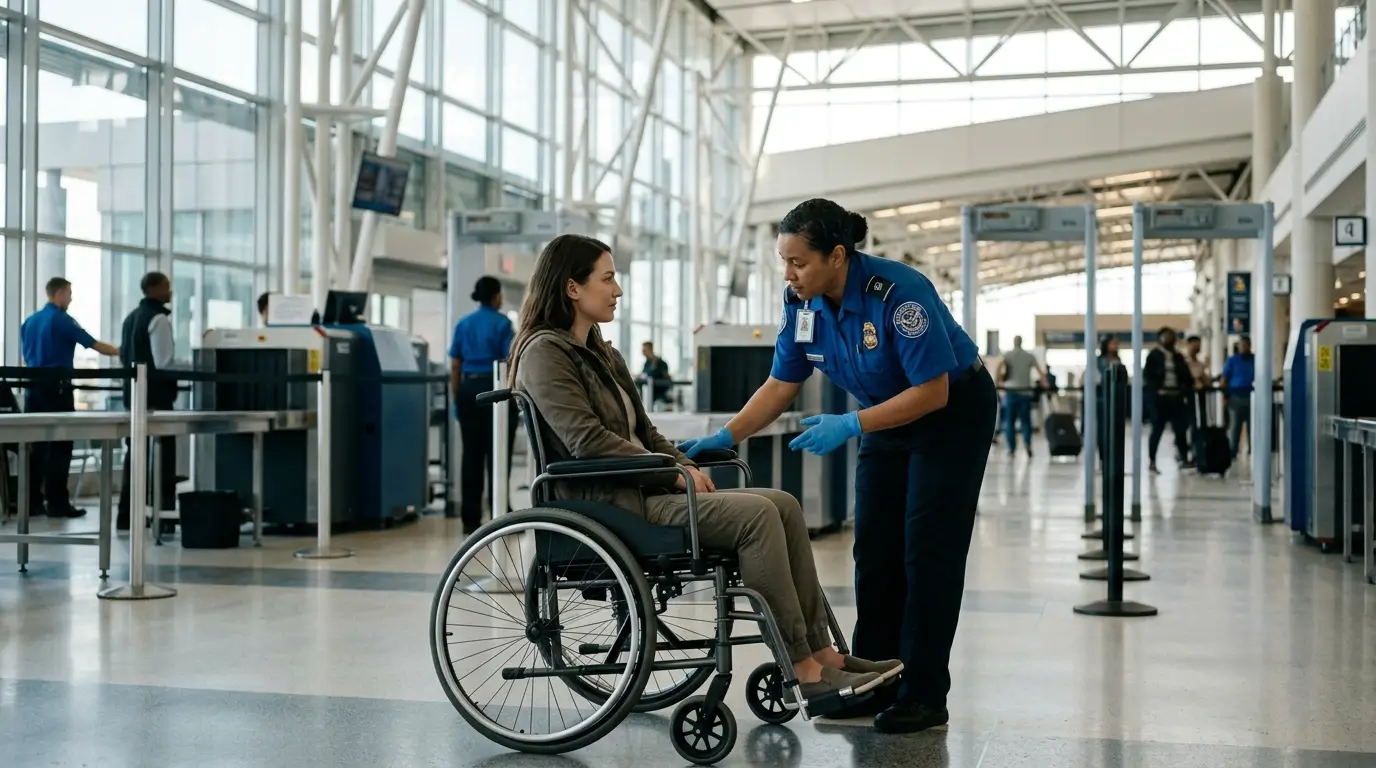
TSA checkpoints become far less invasive when you communicate your personal physical boundaries clearly before screening begins. Tips for Flying Comfortably with a Mobility Aid Tell the security supervisor immediately if you cannot stand unsupported or walk through the metal detector frame without physical pain. TSA officers must conduct a modified seated pat-down while keeping your assistive device in full view.
Also Read: How to Plan Wheelchair Accessible Trips to Europe 2026
Sign up for the TSA Cares program at least seventy-two hours prior to your scheduled flight departure. Tips for Flying Comfortably with a Mobility Aid A dedicated passenger support specialist will meet you at the terminal entrance and guide you through the screening line. Applying these tips for flying comfortably with a mobility aid turns an intimidating checkpoint into a fast breeze.
4. Strip Detachable Components Before the Jet Bridge
Baggage handlers work under fierce departure deadlines and rarely understand delicate specialized equipment. Tips for Flying Comfortably with a Mobility Aid Remove every loose accessory, including footrests, side guards, joystick controllers, and custom headrests, right before you reach the airplane door. Pack these fragile items into a heavy-duty duffel bag that you carry into the main cabin.
Keep your joystick or sensitive electronics tucked safely beneath the seat in front of you. Tips for Flying Comfortably with a Mobility Aid Losing an expensive electronic joystick controller during transit stops your trip cold upon landing. Label every detached part with bright neon tape so nothing gets left behind in the overhead bin.
5. Photograph Your Equipment at the Departure Gate
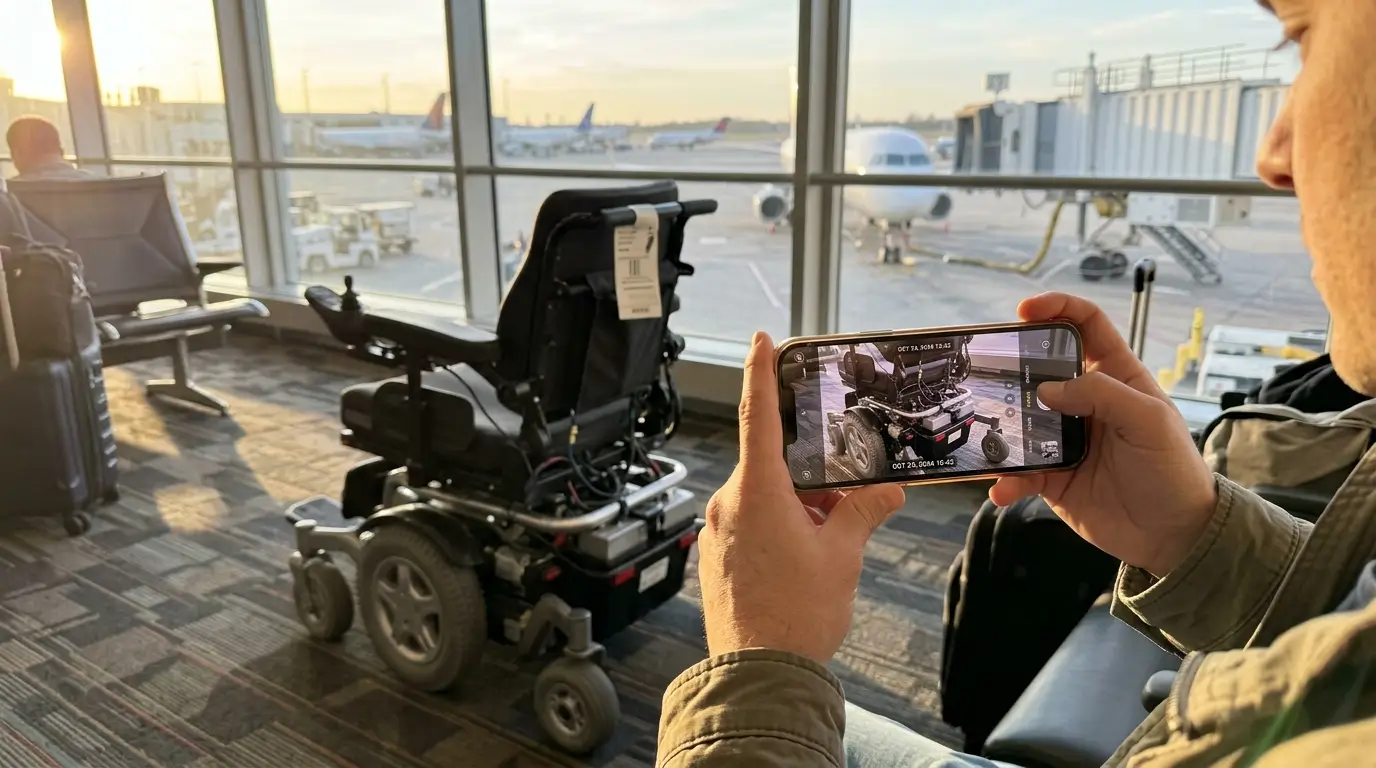
Snap crisp, timestamped photos of your chair or walker from all four angles right on the jet bridge. Tips for Flying Comfortably with a Mobility Aid Capture close-up images of the frame, motor housing, upholstery, and serial number plates to document pristine pre-flight condition. These quick snapshots serve as ironclad legal proof if the ground crew bends a rim or scratches your paint.
Airlines must repair or replace damaged assistive devices under federal Department of Transportation regulations. Tips for Flying Comfortably with a Mobility Aid Showing the complaint manager clear timestamped photographic evidence on your phone eliminates endless denial arguments on arrival. Take thirty seconds to document your gear before handing it over to the ramp crew.
6. Attach Clear Laminated Handling Instructions
Write step-by-step operating guidelines in plain language and zip-tie them directly across the back of your frame. Tips for Flying Comfortably with a Mobility Aid Explain how to disengage freewheel levers, fold the backrest, and locate safe lifting points on heavy metal components. Ramp workers appreciate straightforward visuals that prevent accidental mechanical damage while loading the cargo bay.
Translate your written instructions into the local language if you are flying across international borders. Tips for Flying Comfortably with a Mobility Aid Using clear laminated handling guidelines written in bold print ensures baggage crews handle your machine correctly. This habit ranks among the most effective tips for flying comfortably with a mobility aid because it prevents broken mechanical levers.
7. Reserve an Aisle Chair Transfer in Advance
Boarding an aircraft when you cannot walk requires a specialized narrow transfer seat known as an aisle chair. Tips for Flying Comfortably with a Mobility Aid Speak directly to the gate agent forty-five minutes before boarding begins to verify that transfer personnel are already en route. Waiting until general boarding starts leaves you stranded in a chaotic crowd of pushing passengers.
Inform the transfer crew exactly how you prefer to move your body during the seat transfer process. Clear communication prevents painful shoulder pulls or awkward drops during the tight cabin shift. A reliable aisle chair transfer requires teamwork, so direct the airport helpers with calm, assertive instructions.
8. Carry Your Custom Pressure Cushion Onboard
Standard airline seats offer terrible ergonomic support and create nasty pressure points after two hours in the air. Never let baggage handlers send your custom wheelchair cushion down into the freezing cargo hold beneath the plane. The extreme cargo bay temperatures can ruin specialized air cells or gel matrices permanently.
Sit on your personal cushion directly in the airplane seat to preserve your posture and protect skin integrity. Using simple pressure relief cushions makes cramped economy seating feel ten times more tolerable during long flights. Regular tips for flying comfortably with a mobility aid always emphasize bringing critical posture gear into the passenger cabin.

9. Pack a Compact Travel Maintenance Kit
Airplane vibrations and rough tarmac handling can easily rattle loose bolts on folding frames or brake assemblies. Pack metric Allen wrenches, extra zip-ties, duct tape, and spare tire valve extenders inside your carry-on luggage. Having the right hardware lets you tighten a wobbly armrest immediately after deplaning.
Keep your tools compliant with aviation security rules by ensuring screwdrivers and wrenches measure under seven inches in total length. Carrying a dedicated emergency repair kit saves you from searching for a bicycle shop in an unfamiliar foreign city. You fix tiny mechanical issues in minutes right at the gate.
10. Claim In-Cabin Storage Closet Priority
Federal aviation rules mandate that commercial passenger jets contain a designated storage space inside the main cabin for at least one folding wheelchair. Request this priority space from the flight attendants as soon as you cross the airplane threshold. Storing your manual frame inside the cabin completely eliminates the danger of cargo bay destruction.
Present this request politely but firmly before the crew fills the coat closet with crew luggage or first-class jackets. Securing the designated cabin closet guarantees your chair stays dry, warm, and ready the second the aircraft parks. That peace of mind lets you relax completely throughout your flight.
11. Master Battery Transport Regulations for Power Chairs
Airlines follow strict international safety regulations regarding lithium-ion and sealed lead-acid power supplies on passenger flights. Identify your battery chemistry, watt-hour ratings, and disconnection procedures before arriving at the terminal check-in desk. Lithium batteries exceeding three hundred watt-hours must travel in your carry-on bag with terminals safely insulated.
Print the manufacturer technical data sheet showing your battery meets UN 38.3 transport safety standards. Handing this battery compliance document to the airline counter agent stops confusing security delays immediately. Knowing the exact power specifications keeps you compliant with every global airline carrier.
12. Take Full Advantage of Priority Pre-Boarding
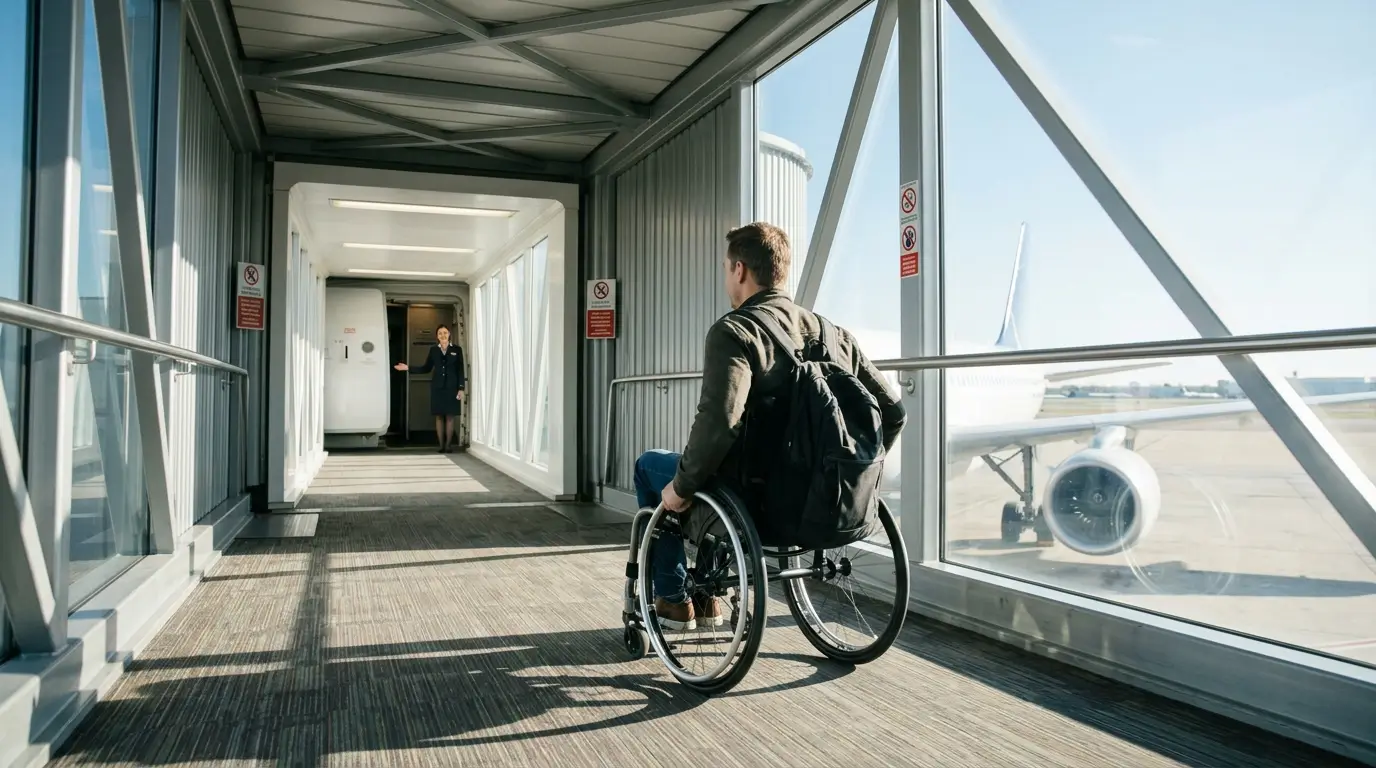
Moving down the jet bridge during early boarding provides the space and time you need to settle comfortably without feeling rushed. You can transfer to your seat and organize your carry-on bags at a calm pace. Standing aside while hundreds of passengers bump your legs with heavy rollaboard suitcases creates needless physical stress.
Position yourself near the boarding podium when the gate agent makes the initial pre-boarding call for travelers needing extra time. Utilizing priority boarding privileges ensures you reach your seat without enduring chaotic crowd bottlenecks in the narrow airplane aisle. It sets a peaceful tone for the entire trip.
13. Request a Ramp Check Confirmation from Cabin Crew
Ask the lead flight attendant to verify with the ramp crew that your mobility equipment has been safely loaded into the cargo hold. Ground personnel scan gate-checked items, and the flight crew can check their internal load manifest right from the cabin system. This simple confirmation gives you total reassurance before the pilot pushes back from the gate.
Ring the attendant call button five minutes before departure doors close if nobody has confirmed your equipment loading. Getting verbal confirmation of your cargo hold stowage removes anxiety and lets you settle in with a movie. Implementing practical tips for flying comfortably with a mobility aid includes checking on your equipment every step of the way.
14. Stay Seated Until the Entire Aircraft Empties
Rushing to stand or deplane when the seatbelt sign turns off only leaves you stuck in a standing crowd waiting for your aisle chair. Remain comfortable in your seat while other passengers scramble to pull heavy bags from the overhead bins. Airport ground staff need extra time to bring your personal equipment up from the cargo hold to the jet bridge anyway.
Use these quiet final minutes to gather your electronics, zip your jacket, and stretch your legs. Deplaning with the help of a calm transfer team after the cabin clears protects you from being bumped by hurried travelers. You exit smoothly and find your equipment waiting right outside the aircraft door.
Frequently Asked Questions
What are the best tips for flying comfortably with a mobility aid on long international flights?
Request a bulkhead seat for extra legroom and stay hydrated throughout the flight. Keep personal medication and critical spare parts inside your cabin bag rather than checking them. Move your feet and ankles every hour to promote healthy blood circulation during long overseas routes.
Does checking a wheelchair or walker cost extra on commercial airlines?
Commercial airlines never charge baggage fees for personal mobility equipment. Under federal and international aviation rules, assistive devices like manual wheelchairs, electric power chairs, walkers, and canes do not count against your standard baggage allowance. Always declare them as assistive devices when checking in at the ticket counter.
What happens if an airline damages my mobility equipment during transit?
File an official damage claim at the airport baggage service desk immediately before leaving the terminal. Under Department of Transportation rules, airlines must cover the complete repair or replacement costs for damaged mobility devices without standard domestic baggage liability limits. Take clear photos of all damages right at the gate.
Can I bring my mobility scooter battery through airport security?
Dry-cell and sealed lead-acid batteries can stay attached to your scooter if safely isolated. Lithium-ion batteries must generally be disconnected, removed from the frame, and carried inside the passenger cabin. Check your battery watt-hour ratings against your airline guidelines at least forty-eight hours before your flight departure.
How early should I arrive at the airport when traveling with a mobility device?
Arrive at least two hours before domestic flights and three hours before international departures. That buffer gives ticket agents time to tag your equipment, lets security complete specialized screenings, and ensures transfer crews meet you at the departure gate without putting you under tight time pressure.
Conclusion
Traveling with adaptive gear requires extra preparation, but it should never keep you from seeing the world. Taking control of the process ensures you arrive safely and ready to enjoy your trip. What is your go-to strategy for stress-free flying with your equipment?




One Comment