
Tips for Long Distance Train Travel with Luggage 2026
Finding the best tips for long distance train travel with luggage can mean the difference between a scenic dream ride and a grueling physical workout. There I was, sweating on a crowded platform in Munich, trying to hoist an oversized suitcase up three narrow metal steps while passengers groaned behind me. That painful moment taught me that rail trips demand unique packing strategies.
Phase 1: Selecting the Right Bags for the Rails
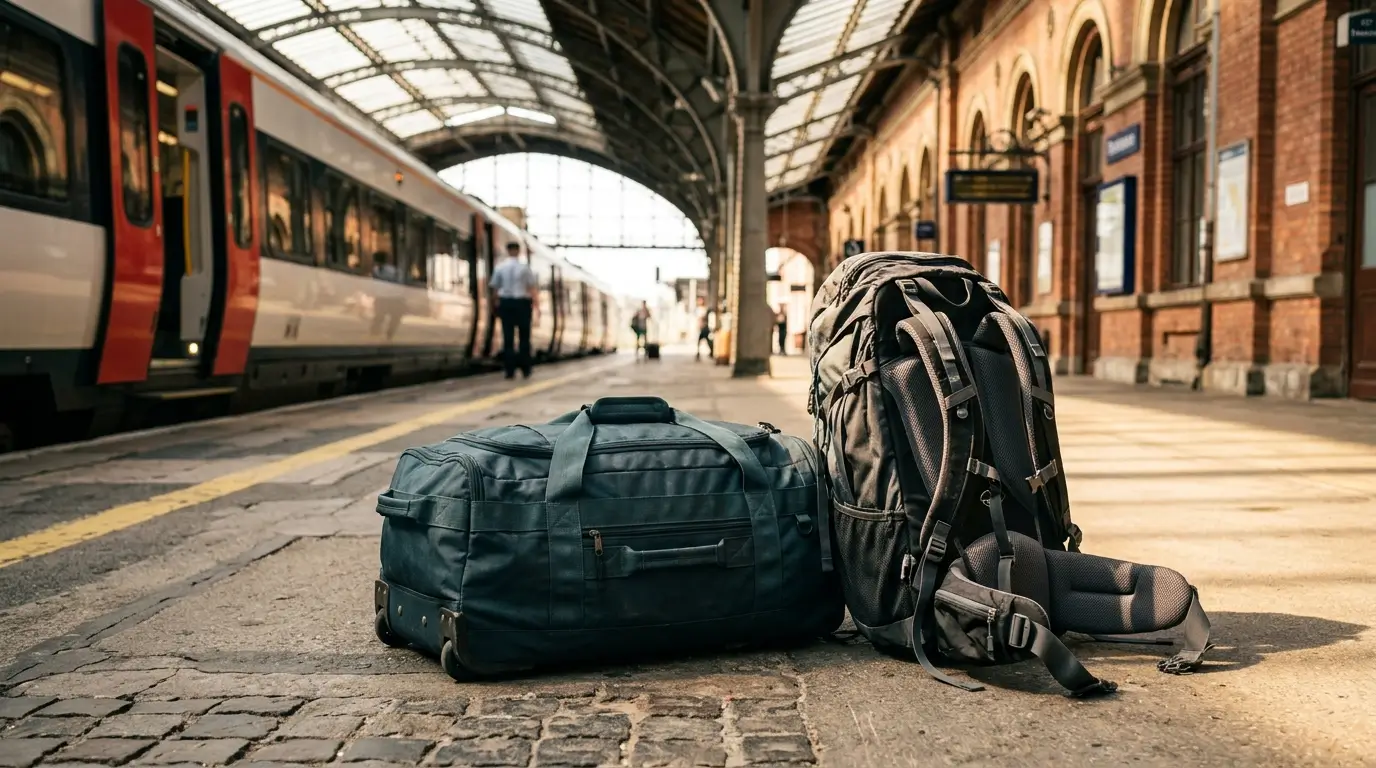
Different luggage types behave completely differently when you transition from smooth airport terminals to train boarding steps. Spinners with four wheels are brilliant on flat station floors but become a total nightmare on cracked asphalt, cobblestone pathways, and narrow train boarding steps.
I highly recommend a high-quality wheeled duffel bag or a sturdy travel backpack with a supportive hip belt, like the Osprey Farpoint series. These options give you the flexibility to lift your gear quickly without losing your balance on moving train vestibules. Remember that you are solely responsible for lifting your own bags onto the train, so if you cannot hoist your suitcase over your head at home, it is too heavy for the rails.
I always test my baggage weight limit in my hallway before leaving for the station because struggling in a train doorway is highly stressful. Look for bags with multiple grab handles on the top, side, and bottom. These extra handles make it much easier to pull your bag out of tight luggage racks when you are in a rush to disembark. Soft-sided suitcases are, IMO, generally superior to hard-shell cases for train trips because they have a bit of give, allowing you to squeeze them into tightly packed racks.
Phase 2: Booking Your Tickets with Baggage in Mind
Planning your ticket purchase around your carrying capacity is a detail most travelers overlook until it is too late. Integrating these tips for long distance train travel with luggage into your booking process saves money and stress.
Amtrak in the United States offers incredibly generous baggage limits, allowing two carry-on bags and two personal items for free. However, European budget high-speed lines like Ouigo or Avlo enforce strict bag sizes and will charge heavy fees at the platform if you exceed them. When booking your tickets, look closely at the carriage layout and consider upgrading to first-class seating if you travel with multiple large bags.
The extra quiet space often translates to much larger luggage racks that do not fill up within seconds of boarding. I once saved ten dollars on a ticket only to pay triple that amount in baggage penalties at the boarding gate in Spain. Also, check if your departure station offers red cap service or luggage carts. Amtrak’s red caps will help you load your bags onto the train before general boarding begins, which is a lifesaver if you have mobility issues or heavy bags.
Phase 3: Station Tactics and Finding Your Carriage
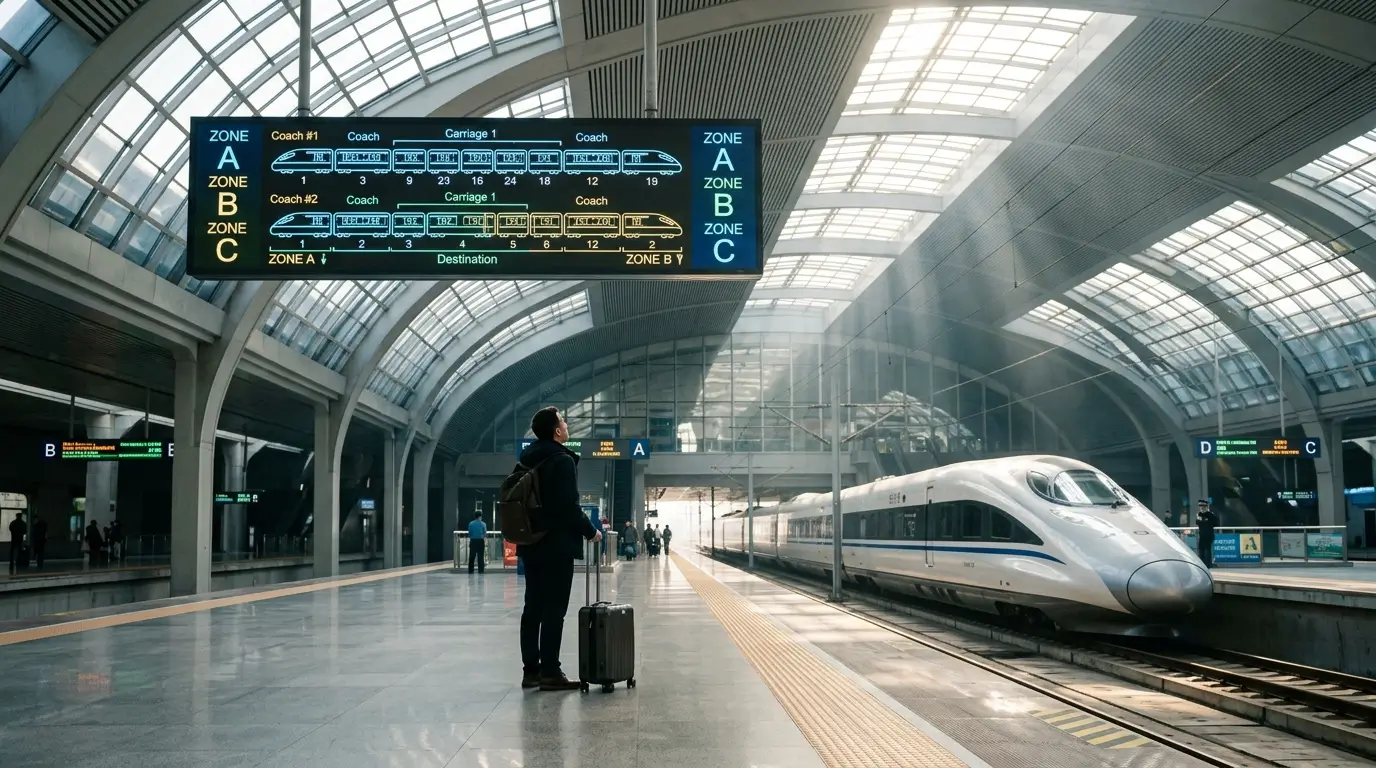
Arriving at the platform early gives you a massive advantage when trying to secure the best storage spots on board. Train platforms are busy environments, and unlike airports, trains only stop for a few minutes at intermediate stations. Look at the station departure boards or the mobile app to find the carriage composition map.
This map shows exactly where your specific coach will stop along the platform so you can walk there before the train even rolls in. Standing in the correct boarding zone means you can step onto the train first and claim the coveted eye-level luggage shelves. If you wait until the last minute, you will find yourself carrying heavy suitcases down narrow aisles against a sea of oncoming people.
Many stations in Europe also have raised platforms that sit level with the train door, but older stations still require you to climb steep steps with your bags. Knowing this ahead of time helps you mentally prepare for the quick lift required to get inside.
Phase 4: Practical Tips for Long Distance Train Travel with Luggage Storage
Once you step across the gap between the platform and the train, your strategy must pivot to quick stowing. Using these tips for long distance train travel with luggage ensures you won’t hold up the entire boarding queue behind you.
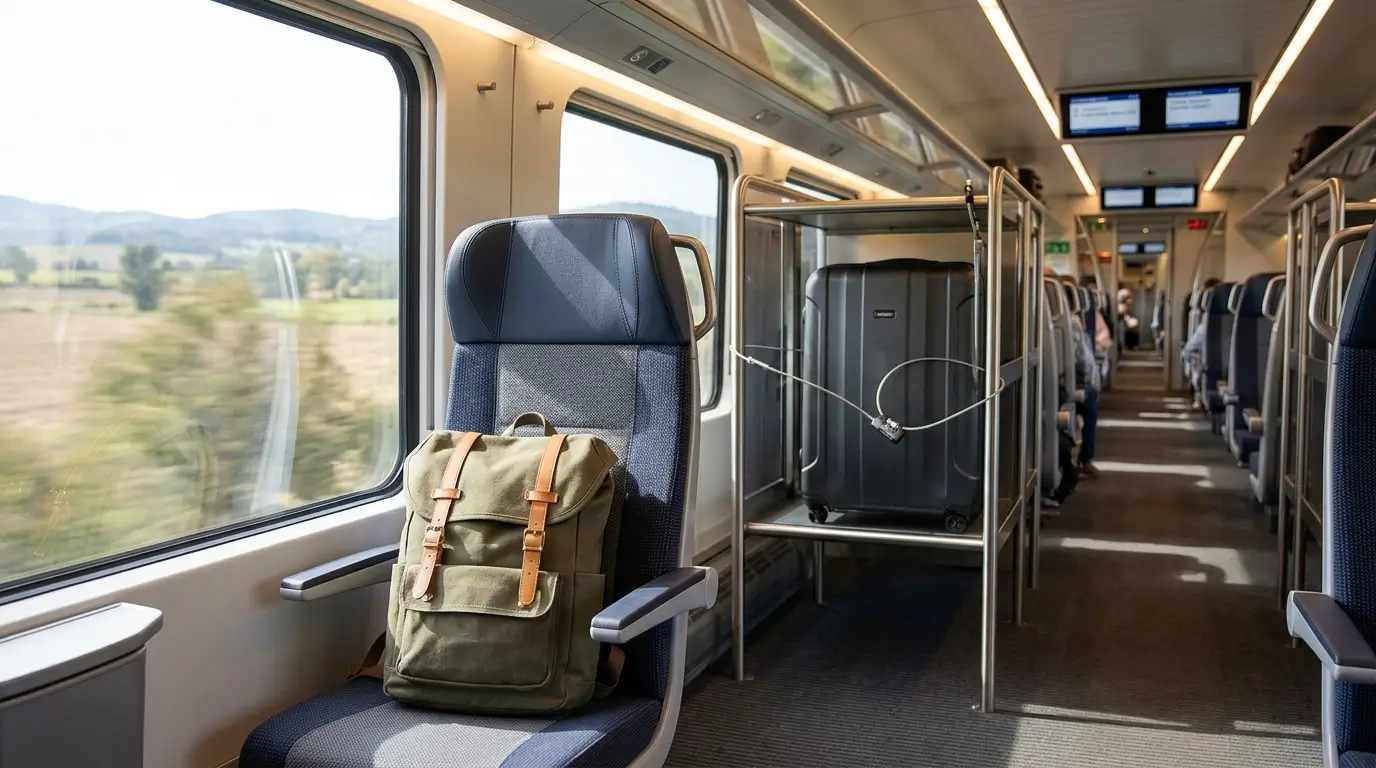
The overhead racks on long-distance trains are surprisingly spacious, often accommodating mid-sized suitcases that would never fit in an airplane overhead bin. Slide your heaviest bags into the large racks near the carriage doors, but try to keep them on the lower or middle shelves to avoid dropping them on your head. If those racks are full, look for the triangular spaces created when seats are arranged back-to-back in the middle of the carriage.
Also Read: Best Overnight Sleeper Trains for First Time Travelers 2026
This is a secret goldmine of storage space that many passengers walk right past. Never leave your bags blocking the aisles or the emergency doors, as train conductors are notoriously strict about keeping pathways clear for safety. If you have a smaller backpack, it can easily fit right under the seat in front of you, keeping your legroom mostly intact while leaving the overhead racks open for others.
Phase 5: Keeping Your Valuables Safe and Accessible
Securing your belongings on a train requires a balance between easy access and theft prevention. By applying smart tips for long distance train travel with luggage, you can enjoy the diner car without constant worry. You do not need to hover over your bags for a ten-hour journey, but you must keep your absolute essentials close.
Keep a small personal daypack containing your passport, wallet, phone, charger, and medication right at your seat. For your larger suitcases resting in the racks at the end of the carriage, use a simple retractable cable lock to secure them to the luggage frame. This simple deterrent prevents anyone from accidentally or intentionally walking off with your bag during quick station stops while you are asleep or visiting the café car.
I always sit on the side of the train that gives me a clear line of sight to the luggage rack whenever possible. Keep in mind that train stations are public spaces, so the danger of theft is highest right before the doors close at a station, not while the train is moving.
Phase 6: Organizing Your Gear for Multi-Day Rail Journeys
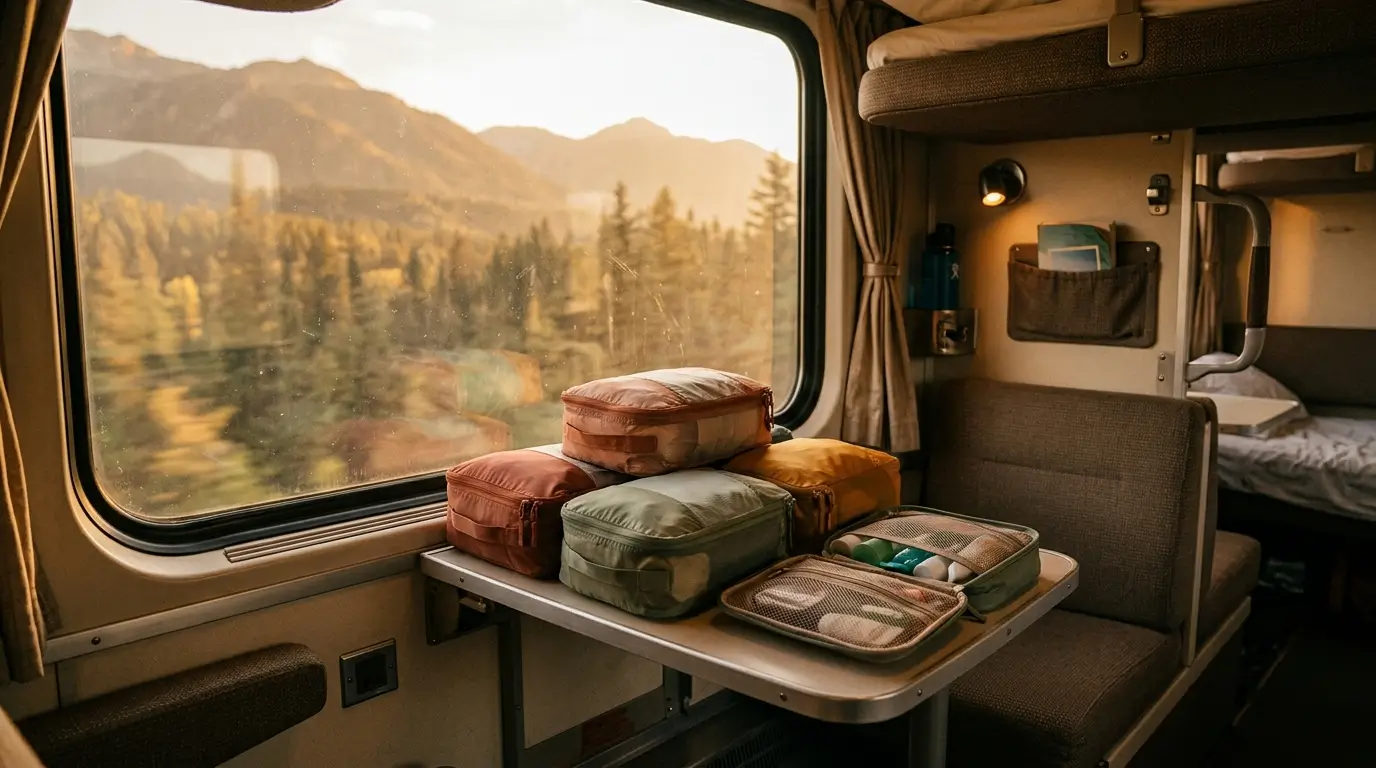
Surviving a multi-day journey on the tracks requires a systematic approach to what you pack where. You do not want to open your giant suitcase in the middle of a moving, rocking train car just to grab a clean pair of socks or a toothbrush. Use compression packing cubes to organize your clothes, and pack a dedicated overnight pouch that you can easily pull out before bed.
Keep toiletries, a light towel, wet wipes, and comfortable sleeping clothes in this small pouch so you can access them without causing a scene. Amtrak roomettes and sleepers have extremely limited floor space, so keeping your main suitcase in the communal luggage area downstairs while keeping only your overnight bag in your room is the absolute best way to maintain your sanity.
If you are traveling coach, a small neck pillow and a light blanket should be clipped to the outside of your backpack so they do not take up precious internal space. Keeping your immediate seating area clean and uncluttered makes a massive difference in your mental comfort over a forty-hour ride.
FAQs
Do trains have weight limits for suitcases?
Yes, but they are rarely enforced compared to airlines. Amtrak allows bags up to 50 pounds, while European trains usually do not weigh bags unless they look ridiculously massive. However, you must be able to lift your own bags safely, so keep them manageable.
Where do you put heavy bags on a train?
Large suitcases go into the dedicated luggage racks at the ends of each carriage or in the spaces between back-to-back seats. Smaller bags, duffels, and coats easily fit on the overhead racks running along the length of the train car ceiling.
Is it safe to leave luggage unattended on long train trips?
Generally yes, but you should take basic precautions. Use a flexible cable lock to attach your bags to the luggage rack frames. Always keep your most valuable items, like electronics, cash, and passports, in a small daypack that never leaves your side.
What are the top tips for long distance train travel with luggage on Amtrak?
Take full advantage of their free checked baggage service if your stations offer it. This keeps your heavy suitcases out of your way entirely. For carry-ons, stick to the lower level racks if you are traveling in a bi-level Superliner coach to avoid carrying heavy bags up narrow stairs.
Can I access my checked luggage during a long train trip?
No, once you check your bags at the station, you cannot access them until you reach your final destination. Always make sure to pack your toiletries, chargers, medications, and valuables in your carry-on bag so you have them during the journey.
Conclusion
Traveling by rail is one of the most beautiful ways to see the world once you master the logistics of your gear. With the right bags and a smart packing strategy, you can sit back and watch the landscape roll by without a single worry. What is your go-to destination for your next train adventure?




One Comment